What is 1-MNA?

1-methylnicotinamide (1-MNA) is a naturally occurring metabolite of nicotinic acid and nicotinamide – two principal forms of vitamin B3 (niacin). This compound is produced in the human body through metabolic processes involving niacin and is present in various tissues, particularly in the liver.

In recent years, the 1-MNA molecule has attracted increasing scientific interest due to its potential role in regulating selected biological processes, including endothelial function, inflammatory pathways and mechanisms associated with cardiovascular homeostasis.

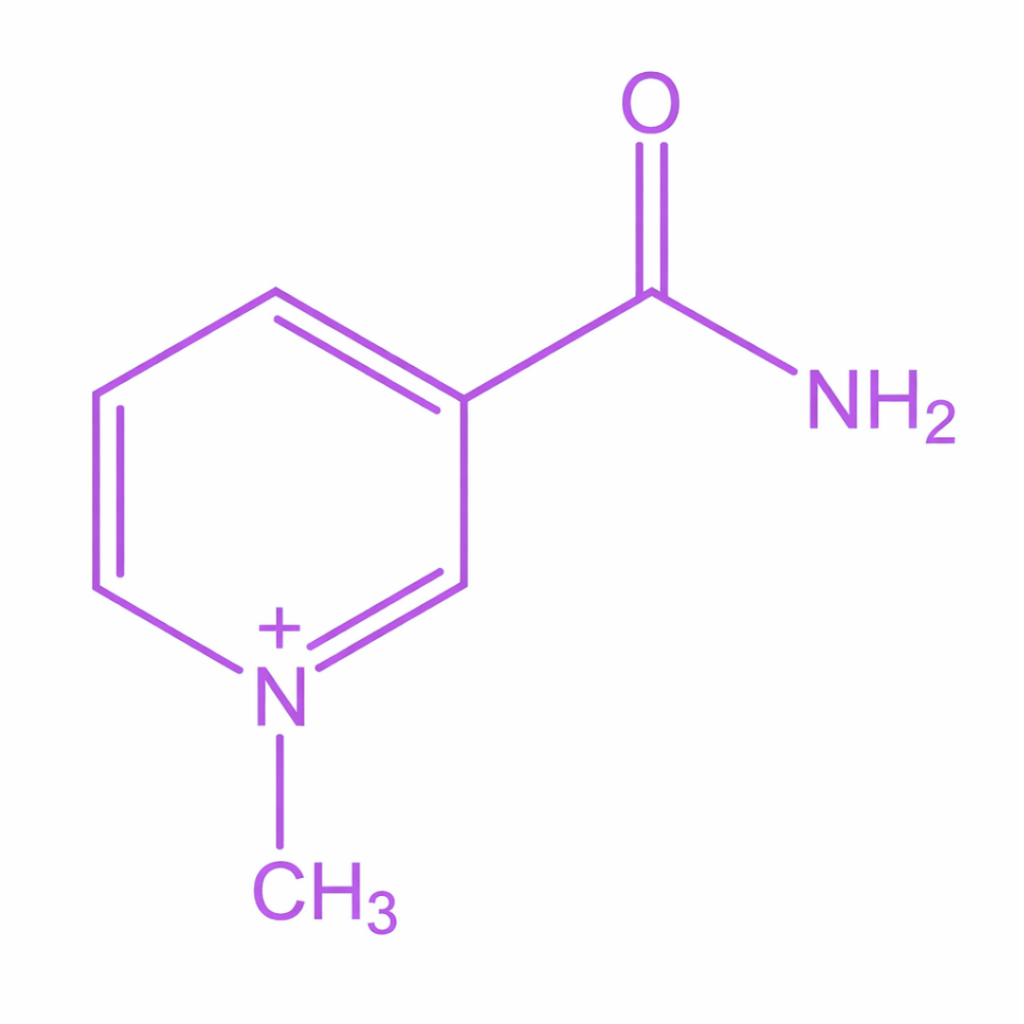
What is 1-MNA?

1-methylnicotinamide (1-MNA) is a naturally occurring metabolite of nicotinic acid and nicotinamide – two principal forms of vitamin B3 (niacin). This compound is produced in the human body through metabolic processes involving niacin and is present in various tissues, particularly in the liver.

In recent years, the 1-MNA molecule has attracted increasing scientific interest due to its potential role in regulating selected biological processes, including endothelial function, inflammatory pathways and mechanisms associated with cardiovascular homeostasis.
Biological Role

The vascular endothelium plays an essential role in regulating vascular tone and maintaining the balance between pro- and anti-thrombotic processes.

Research indicates that 1-MNA may influence endothelial cell function, including mechanisms related to nitric oxide production and the release of endogenous biologically active factors such as prostacyclin (PGI2).

Prostacyclin is one of the key regulators of platelet aggregation and vascular tone and plays an important role in maintaining normal cardiovascular function.

Biological Role

The vascular endothelium plays an essential role in regulating vascular tone and maintaining the balance between pro- and anti-thrombotic processes.

Research indicates that 1-MNA may influence endothelial cell function, including mechanisms related to nitric oxide production and the release of endogenous biologically active factors such as prostacyclin (PGI2).

Prostacyclin is one of the key regulators of platelet aggregation and vascular tone and plays an important role in maintaining normal cardiovascular function.

Metabolism of 1-MNA

In the human body, 1-MNA is primarily produced in the liver through the methylation of nicotinamide. This reaction is catalyzed by the enzyme nicotinamide N-methyltransferase (NNMT).

Subsequently, 1-MNA undergoes further metabolic transformations leading to the formation of pyridone derivatives such as 2-PYR and 4-PYR, which represent the final metabolic products excreted from the body.

Metabolism of 1-MNA

In the human body, 1-MNA is primarily produced in the liver through the methylation of nicotinamide. This reaction is catalyzed by the enzyme nicotinamide N-methyltransferase (NNMT).

Subsequently, 1-MNA undergoes further metabolic transformations leading to the formation of pyridone derivatives such as 2-PYR and 4-PYR, which represent the final metabolic products excreted from the body.

Sources of 1-MNA

1-MNA is an endogenous compound produced in the body as a result of niacin metabolism. Small amounts of this molecule may also be present in certain foods, particularly those of plant and animal origin.

However, the primary source of 1-MNA in the human body remains metabolic processes occurring within the organism.

Sources of 1-MNA

1-MNA is an endogenous compound produced in the body as a result of niacin metabolism. Small amounts of this molecule may also be present in certain foods, particularly those of plant and animal origin.

However, the primary source of 1-MNA in the human body remains metabolic processes occurring within the organism.

Significance in Biomedical Research

Over the past two decades, 1-MNA has been the subject of
numerous studies conducted by international research teams.

These studies focus on the analysis of:

biological mechanisms
related to endothelial
function

regulation of inflammatory
processes

mechanisms associated
with cardiovascular
homeostasis

the potential significance of this molecule across various areas of biomedical research

Understanding the biological activity of 1-MNA provides the foundation for further research into its potential applications in the life sciences.

contact
PHARMENA S.A.
Gdanska 47/49
90-729 Lodz
+48 42 280 77 07
info@mnaxis.com